
Table of Contents
- Why Necklaces Tangle and How to Prevent It
- Choose the Best Necklace Lengths for Layering
- Use a Necklace Detangler Clasp for Extra Security
- Master the Technique: Step-by-Step Layering Process
- How to Store Necklaces to Prevent Tangling
- How to Fix a Tangled Gold Chain
- Common Mistakes to Avoid When Layering
- Frequently Asked Questions
Last Updated: 3 September 2026
Why Necklaces Tangle and How to Prevent It
Necklaces tangle because chains naturally interlock when they move freely against each other, especially fine chains that catch on themselves or neighbouring pieces. When you layer necklaces without proper technique or spacing, the chains compress against your skin and each other, creating friction points where delicate links knot. The good news is that tangling isn't inevitable. With the right approach, you can wear genuinely delicate, elegant pieces stacked together all day without a single knot.
At The Vault Luxury Collection, we've designed our layered necklaces specifically to address this challenge. Our pieces feature graduated chains and thoughtful spacing that keep strands separated. But even if you're mixing pieces from different sources, the techniques covered here will transform how you layer necklaces without tangling.

The key is prevention: selecting the right lengths, understanding how different chain weights interact, and mastering a straightforward layering sequence.
Choose the Best Necklace Lengths for Layering
The most common mistake when layering necklaces is choosing lengths that sit too close together. When strands rest at nearly identical heights, they crowd each other and tangle instantly. The solution is deliberate spacing: your layered pieces should occupy distinctly different zones on your body.
A choker or princess-length necklace (typically 40-45 centimetres) sits high on your neck, just below the collarbone. A matinee length (typically 50-60 centimetres) rests at mid-chest. An opera length (typically 70-85 centimetres) hangs lower, creating clear separation. When you choose necklaces spanning these distinct ranges, each strand has its own territory and they rarely cross paths.
For most people, the ideal layering combination uses three lengths: one short (40-45 centimetres), one medium (55-60 centimetres), and one longer (70-80 centimetres). This creates visible separation and allows each necklace to move independently. If you prefer just two necklaces, pair a short piece with something at least 15-20 centimetres longer.
Chain weight also matters. Heavier chains are less prone to tangling because they have more momentum and don't catch as easily on lighter strands. Delicate chains require more careful spacing.
Use a Necklace Detangler Clasp for Extra Security
A necklace detangler clasp is a small device designed to keep individual chains separated at the back of your neck. Rather than all your necklaces bunching together at the clasp point, a detangler clasp holds each one slightly apart, preventing them from wrapping around each other. This is particularly useful if you prefer to layer necklaces with similar lengths or want maximum security throughout the day.
Detangler clasps come in several styles. The most common is a simple separator bar with multiple loops or slots, each holding one necklace. You thread each chain through its own slot, and the bar keeps them spread out as they hang down your back.
The advantage is straightforward: once your necklaces are threaded through, they simply cannot tangle because they're physically separated. The trade-off is that a clasp system is less flexible than free layering. You're committed to wearing those specific necklaces together in that specific configuration.
For a go-to layered look you wear several times a week, a detangler clasp is worth considering. It's a one-time investment that eliminates tangling entirely for that combination. Just ensure the clasp is small enough that it won't be visible above the neckline of your clothing.
Master the Technique: Step-by-Step Layering Process
The actual process of putting on layered necklaces matters more than most people realise. The order in which you fasten them and how you position them as you go determines whether they'll tangle by midday. Following a consistent sequence prevents most tangling issues before they start.
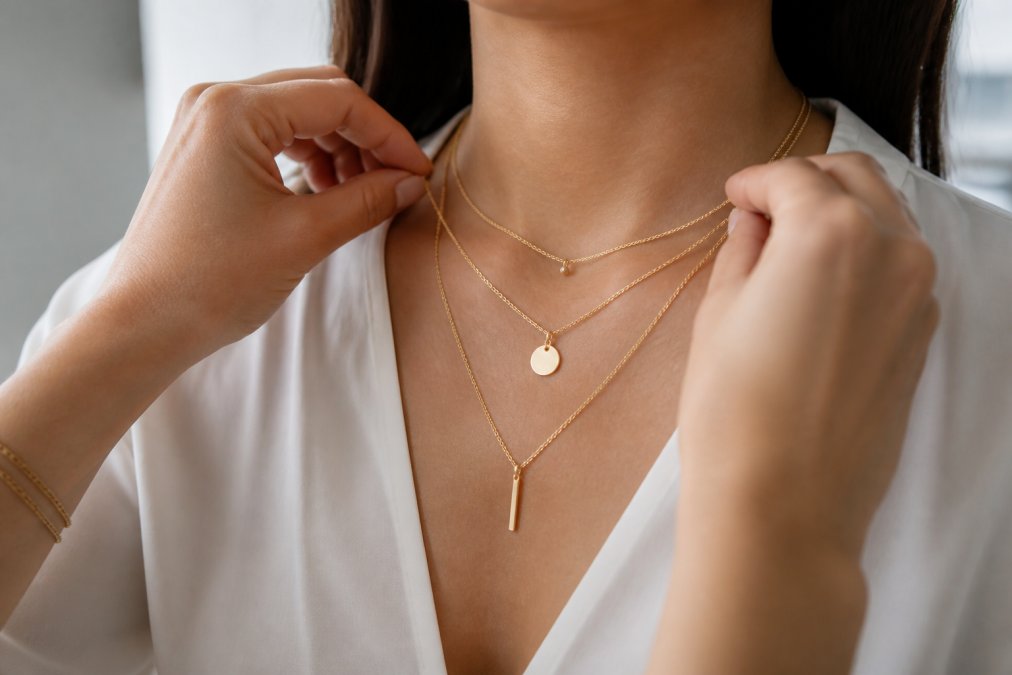
Step 1: Start with Your Base Layer
Begin with your longest necklace. Fasten it first and let it settle into its natural position on your body. The longest piece becomes your foundation because it's the least likely to tangle with others and has the most space to move independently.
Hold the longest necklace at both ends and drape it over your head, then fasten the clasp at the back of your neck. Let it fall naturally without adjusting it yet. Once it's fastened and settled, leave it alone.
Step 2: Add Your Middle Layer
Next, take your medium-length necklace and repeat the process. Drape it over your head, fasten the clasp, and let it settle. The middle piece should rest noticeably higher than your longest necklace, ideally 5-8 centimetres higher at the lowest point.
Here's the critical part: once your second necklace is fastened, gently position it so it sits clearly separated from the longest piece. Use your finger to ensure the chains aren't twisted around each other at the back of your neck. This is where most tangling begins, so take a moment to verify that your two chains are lying flat and parallel, not wrapped around each other.
Step 3: Finish with Your Top Layer
Finally, add your shortest necklace. Drape it over your head and fasten it at the back of your neck. This piece sits highest, closest to your collarbone or even as a choker. By adding your shortest piece last, you're working from longest to shortest, which naturally creates the spacing you need.
Once all three are fastened, do a final check. Run your fingers along the back of your neck to ensure no chains are twisted together. Look in a mirror and verify that your three pieces sit at clearly different heights with visible separation.
The entire process takes about two minutes once you've done it a few times. Always add in the same order (longest first, shortest last) and always verify separation at the back of your neck before you finish dressing.
How to Store Necklaces to Prevent Tangling
How you store your necklaces between wears has a dramatic impact on whether they'll tangle the next time you put them on. Necklaces stored in tangled heaps will arrive at your neck already knotted.
The simplest storage method is to hang each necklace individually. Use a jewellery stand, a wall-mounted hook system, or even a simple curtain rod in your wardrobe. Gravity keeps the chain straight, and there's zero opportunity for knots to form.
If hanging space is limited, store necklaces in individual compartments. A jewellery box with divided sections works well, or you can use small ziplock bags, one necklace per bag. Avoid tossing multiple necklaces into a single drawer or box.
For necklaces you layer regularly, consider storing them already fastened as a set. If you always wear the same three pieces together, fasten them once and store them that way. This eliminates the daily assembly process and guarantees they'll never tangle. Store them loosely draped, not coiled up.
The Vault Luxury Collection's pieces are designed with tarnish-resistant materials that maintain their lustre over time. Store your necklaces away from direct sunlight and moisture in a dry jewellery box or hanging system in a cool area of your home.
How to Fix a Tangled Gold Chain
Despite your best efforts, tangles sometimes happen. A tangled gold chain doesn't mean the necklace is damaged, it just needs patience and the right technique to release.
Lay the tangled necklace flat on a clean surface, ideally a soft cloth or towel. Never try to untangle a necklace whilst it's hanging; a flat surface lets you see exactly where the knot is and gives you control.
Apply a tiny amount of lubricant to the knot. Jewellers often use a drop of olive oil or baby oil. The lubricant reduces friction between the chain links, making them slide past each other more easily.
Using a toothpick or a very fine needle, gently work the knot apart. Start by identifying the loop of the knot and carefully wiggling the toothpick through it. Work slowly and deliberately; rushing this step often makes the knot tighter. Once the knot is loose enough, gently pull the two ends of the chain in opposite directions whilst supporting the knot area with your other hand.
After the knot is out, wash the necklace with warm water and mild soap to remove the oil, then dry it thoroughly.
Common Mistakes to Avoid When Layering
The most frequent error is choosing necklaces that are too similar in length. When two pieces sit at nearly the same height, they're destined to tangle. A 50-centimetre and a 55-centimetre necklace will sit almost on top of each other and will tangle within hours.
Another common mistake is fastening all your necklaces and then trying to separate them at the clasp point. By the time you've fastened three necklaces, they've already started wrapping around each other. Instead, position each piece properly as you add it.
Some people layer too many necklaces at once. Three is the practical maximum for most people without significant tangling risk. Four or more necklaces dramatically increases the likelihood of knots.
Wearing layered necklaces with high-necked clothing can also cause tangling. If your necklaces are compressed against your neck by a high collar, they'll tangle more easily because they can't move freely. Save your layered looks for lower necklines.
Finally, avoid adjusting your necklaces constantly throughout the day. Every time you touch them, you increase the risk of creating a tangle. Once you've positioned your layers correctly in the morning, leave them alone.
The Vault Luxury Collection's layered pieces are engineered to sit beautifully without constant adjustment. Our Gold Multi-Strand Layered Chain Necklace features graduated chains that naturally maintain their positions without fussing.
Learning how to layer necklaces without tangling opens up an entirely new approach to jewellery styling. Rather than choosing between a single statement piece and a cluttered mess, you can build sophisticated, multi-dimensional looks that feel intentional and polished. The techniques here, spacing, sequence, and thoughtful storage, work with any necklaces, whether you're mixing pieces you already own or building a layered collection from scratch.
The Vault Luxury Collection specialises in pieces designed specifically for layering, with materials that resist tarnishing and designs that naturally sit at different heights. Our Gold Multi-Strand Solitaire Pendant Necklace combines two distinct chains and a sparkling pendant in a single piece, delivering that curated layered look with zero tangling risk. Whether you choose pre-layered pieces or master the technique with individual necklaces, the result is the same: effortless elegance that elevates your everyday style.

Enter the Vault and discover necklaces that work beautifully together, designed for the discerning wearer who refuses to compromise on either style or practicality.
Frequently Asked Questions
What is the best way to keep necklaces from tangling when layered?
The key is spacing and length variation. Use necklaces that differ by at least 5 centimetres in length, starting with a 40-centimetre base layer and increasing from there. Separate each chain slightly at the clasp so they don't overlap, and consider using a necklace detangler clasp for added security. Avoid mixing delicate chains with chunky links, as they catch more easily. Pre-layered necklaces, like our Gold Multi-Strand Layered Chain Necklace, eliminate tangling risk entirely by keeping chains permanently separated.
Do necklace detangler clasps actually work?
Yes, necklace detangler clasps are highly effective. They work by creating physical separation between chains at the clasp point, preventing the chains from wrapping around each other. They're especially useful if you layer multiple delicate chains or wear your jewellery daily. A detangler clasp is particularly valuable when combining chains of similar thickness or when you prefer maximum security. Many people find them essential for maintaining the longevity of their layered sets.
How do I choose the best necklace lengths for layering?
The golden rule is the 5-centimetre rule: each layer should be at least 5 centimetres shorter than the one beneath it. Start with a base layer around 40 centimetres, add a middle layer at 45 centimetres, and finish with a top layer at 50 centimetres or longer. This creates natural separation and prevents chains from tangling. Avoid using necklaces of identical lengths, as they'll sit on top of each other and catch. Varying lengths also creates visual interest and depth in your stack.
Should I store my necklaces separately to prevent tangling?
Yes, separate storage is essential for preventing tangling. Store each necklace individually in a small pouch, jewellery box compartment, or on a necklace stand. If space is limited, lay them flat in a drawer with tissue paper between each piece. Never pile multiple necklaces together, and avoid storing them in a jewellery box where they can shift and tangle. Proper storage not only prevents frustration but also extends the life of your pieces by reducing stress on the clasps and chains.
This article was written using GrandRanker